



















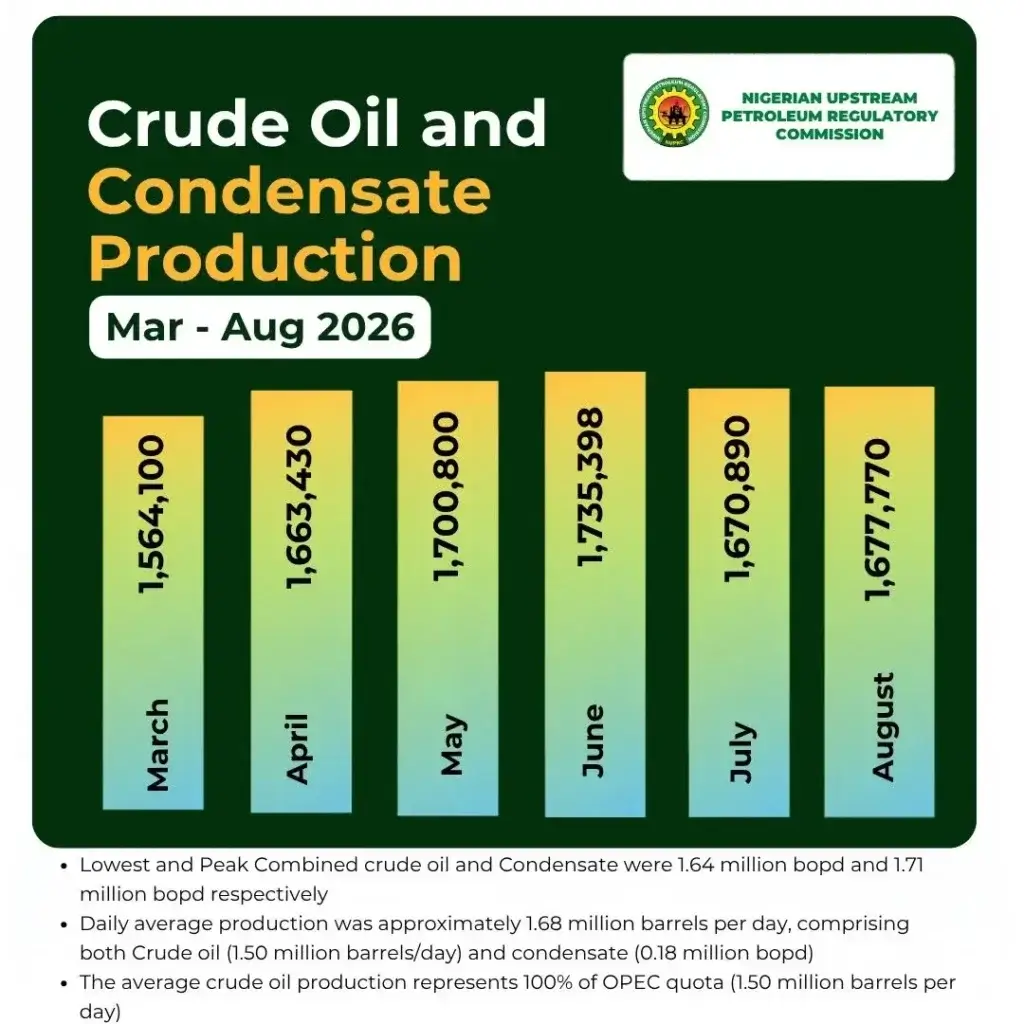
Nigeria’s current production is 1,677,777 barrels of crude oil and condensate per day in August 2026, representing an increase of 0.4% compared to July.
In strict crude oil terms (excluding condensate), Nigeria produced 1,500,190 barrels per day as the country met its OPEC quota for the 4th consecutive month.
In the month under review, the lowest daily crude oil and condensate production was 1.64mmbopd while the highest daily combined production was 1.71mmbopd.
A breakdown of the daily average crude oil and condensate production by terminals/streams during the review month shows that Bonny Terminal accounted for 320.04kbpd while Forcados Terminal followed with 317.40kbpd.
Qua Iboe Terminal recorded an average production of 171.72kbpd of crude oil and condensates while EscravosOil Terminal posted a daily average of 131.71kbpd.
Bonga ranked as the fifth highest producing terminal, recording an average of 92.50kbpd of crude oil.
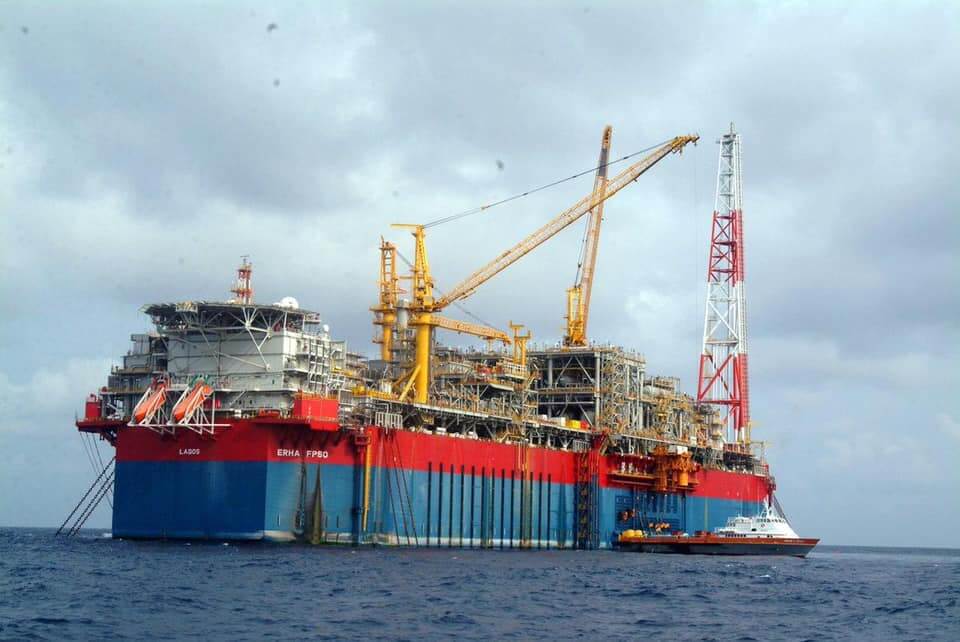
The NUPRC attributed the modest improvement in August production largely to the resolution of the Single Buoy Mooring (SBM) operational challenges at the Erhafield, which had adversely impacted production performance in the preceding month.
The restoration of normal evacuation and production operations at the asset contributed positively to overall production volumes during the period under review.
Production activities across most other producing assets remained relatively stable, with operators sustaining implementation measures aimed at optimising production efficiency, maintaining asset integrity, and minimising operational disruptions.
Routine production and crude evacuation operations were generally sustained across the industry, supporting the observed improvement in output.
While the increase recorded in August was modest, it reflects the industry’s continued efforts to address operational bottlenecks and restore affected production capacity. Stakeholders remain focused on enhancing asset reliability, improving operational resilience and advancing intervention programs to support sustained production growth in the coming months.
The August performance highlights the importance of timely resolution of operational constraints, effective asset management practices, and continued collaboration among industry stakeholders in safeguarding and improving Nigeria’s crude oil production capacity.