

















The Nigerian Ministry of Petroleum strategic plan to reposition the country’s oil and gas sector to be competitively aligned with the its global contemporaries in the best practice of the industry has encountered a major setback following the recent judicial judgement.
A Federal High Court in Nigeria has recently delivered a judgment against the Ministry of Petroleum Resources, reversing the 2020 revocation of the Dawes Island marginal field license previously awarded to Eurafric Energy Limited, and is developed by Petralon 54 Limited since 2022.
The ruling effectively challenges the Nigerian regulator’s 2020 decision not to renew Eurafric’s license that had expired without commercial production after 17 years. An appeal has since been initiated by Petralon 54 Limited, with a stay of execution pending determination by higher courts.
The African Energy Chamber (AEC), the voice of the African energy sector, has strongly condemned the ruling handed down against the Ministry of Petroleum Resources and Petralon, recognizing it not only as an affront to Nigerian companies but a clear example of judicial overreach.
The Chamber, in its media release, equivocally pitched tents with the Ministry and Petralon, calling for a mutual resolution to this unfavourable judicial judgment pave the way for Petralon to continue increasing production, monetizing the asset, and supporting Nigeria’s long-term industry goals.
“The AEC is deeply concerned by the legal reasoning underpinning the judgment. A central issue is the apparent application of provisions of the PIA – enacted on August 16, 2021 – to events that occurred prior to its passage. The Dawes Island license expired in April 2019, and the regulator formally declined renewal in April 2020 – both actions taken under the legal regime in force at the time. Applying the PIA retrospectively risks undermining the principle of legal certainty that underpins long-term upstream investment. Investors commit capital on the basis of clear statutory frameworks, fiscal terms and regulatory authority,” AEC said.
“The ruling also raises operational concerns, particularly in its treatment of approximately 62,000 barrels produced during a well test as evidence of commercial production. In established upstream practice, well testing is a technical evaluation of reservoir performance – not the commencement of sustained commercial production, which requires regulatory confirmation through a technical allowable. Additionally, reliance on an unsigned farm-out agreement to establish enforceable legal interest departs from established contract law principles, under which unsigned documents do not create binding obligations. Taken together, the ruling risks setting a precedent where lower courts intervene in technically complex petroleum matters in a manner inconsistent with regulatory practice and fiscal governance,” it added
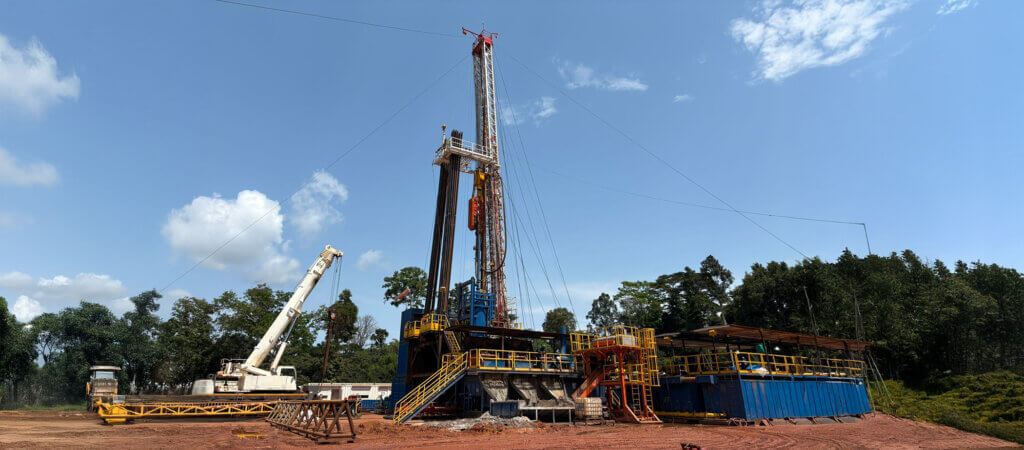
Following the designation of the asset under Petroleum Prospecting License 259 (PPL 259), Petralon moved swiftly to execute its obligations. The licence terms compel a one-well commitment, yet and the company deployed approximately $60 million to drill two new wells and put in place support facilities to commence production within a 12-month period. More than 150,000 barrels have been produced and evacuated to the Bonny Terminal, Nigeria’s largest export terminal, and royalty payments have already commenced being remitted to the state.
The commencement of the second well was witnessed by Heineken Lokpobiri, Minister of State for Petroleum Resources (Oil) in November 2025, signaling alignment between operator and government. The company has since committed to doubling production at the asset, reaffirming its dedication to Nigeria’s oil growth. These results stand in stark contrast to the field’s previous history of non-production. Petralon’s activities demonstrate the effectiveness of Nigeria’s “drill or drop” policy and the broader Project One Million Barrels initiative – reforms designed to ensure that marginal fields contribute meaningfully to national output. At a time when Nigeria is actively courting new upstream capital, visible execution, compliance and royalty generation should be reinforced – not destabilized.