


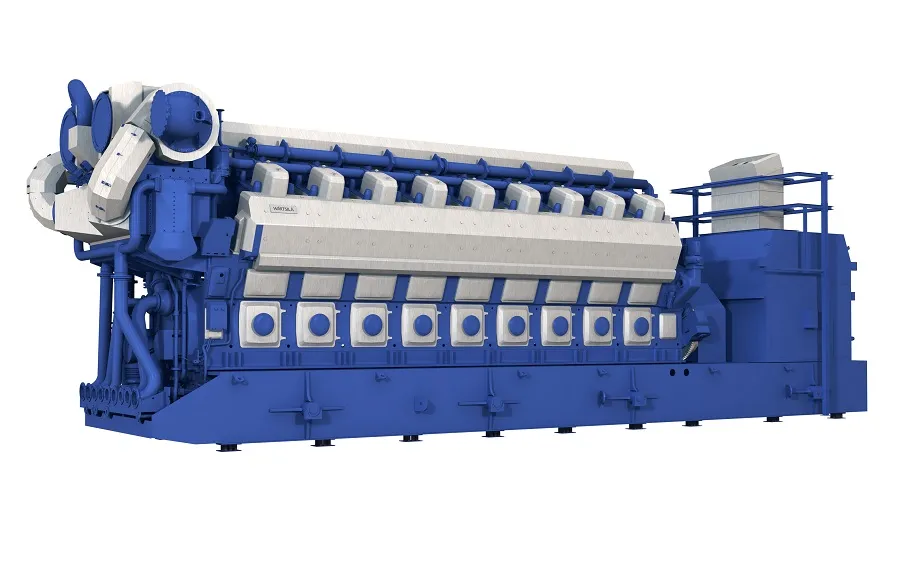
Technology group Wärtsilä has introduced a new methane slip reduction solution for its Wärtsilä 50DF dual-fuel engine. The new technology, which converts Wärtsilä 50DF dual-fuel (DF) engines to spark gas (SG) operation, enables a more optimised combustion process, thereby improving efficiency and lowering methane emissions. Whilst operating on LNG, the new ‘Spark Gas Conversion for Wärtsilä 50DF’ is designed to reduce methane emissions up to 75 percent more than the standard Wärtsilä 50DF engine.
The Spark Gas Conversion for Wärtsilä 50DF minimises methane emissions by introducing an electrically controlled pre-combustion chamber valve for a more optimised combustion process. The estimated result is that, on an IMO weighted (E2-cycle) average, the new solution reduces methane emissions down to 1.1 percent of fuel use.
“The use of LNG and cutting methane emissions is one of the most effective ways to decrease overall greenhouse gas (GHG) emissions from marine engines over the next decade, complementing other efforts to reduce CO2 emissions,” comments Roger Holm, President of Wärtsilä Marine & Executive Vice President at Wärtsilä Corporation. “As the shipping industry strives for more sustainable operations, this new solution represents an important milestone on the road to advancing lower carbon fleets.”
The development of the solution, which consists of converting one-to-two of the total DF engines to SG, was made possible through extensive collaboration between Wärtsilä and Chevron Shipping Company. It was announced earlier that one engine on six Chevron LNG Carriers will be converted from DF to SG as part of Chevron’s aim to reducing the carbon intensity of its operations.
The solution is now available to all vessels in the industry with existing Wärtsilä 50DF engines diesel-electric propulsion, the majority of which are LNG carriers.
The new solution is optimised for LNG as fuel, therefore producing a better energy output per unit of fuel. This means fuel gas savings of up to 4.6 percent, as well as lower methane emissions.
Holm continues: “Wärtsilä has an extensive track-record in reducing methane slip from LNG-fuelled engines, not only as newbuild solutions, but also through retrofitting existing installations. This latest technology complements our extensive portfolio of solutions aimed at reducing methane emissions from vessels.”
With three decades of experience in LNG technology, Wärtsilä is providing market leading performance – both with the dual fuel flexibility provided by the DF engine, as well as with the single fuel SG engine.