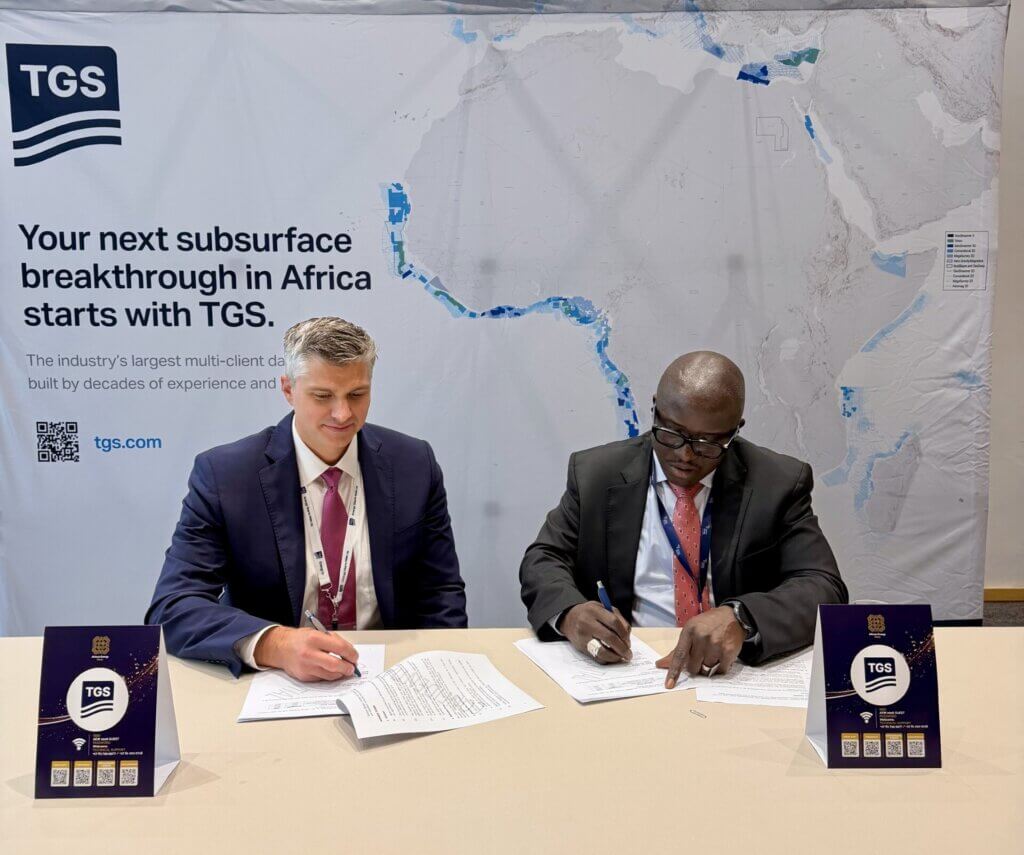








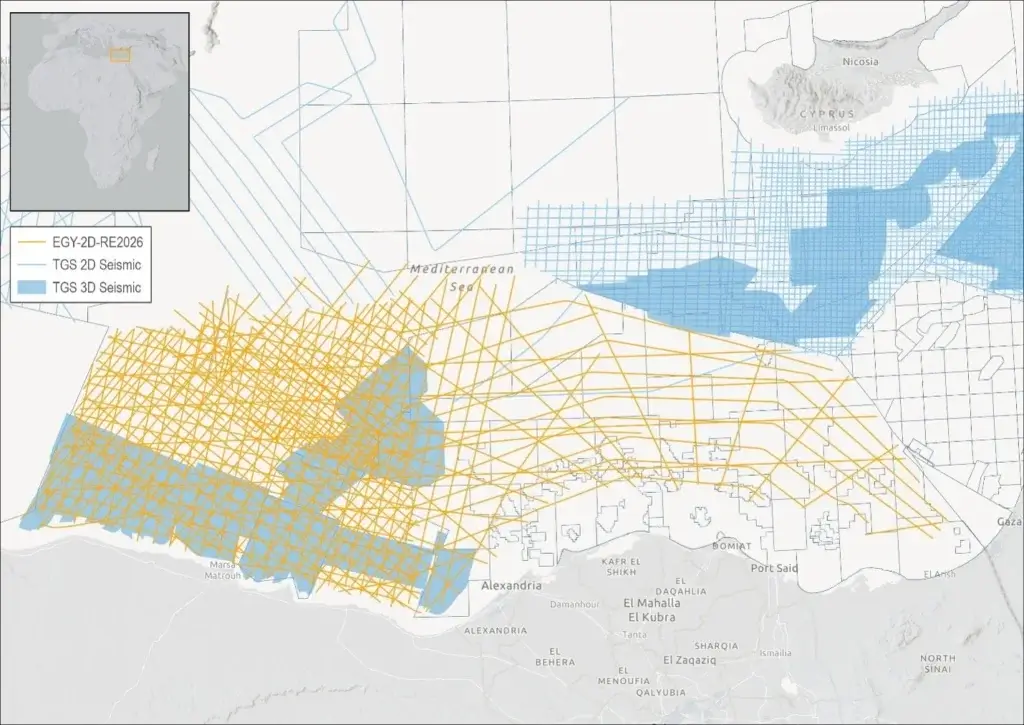
TGS, a global provider of energy data and intelligence, in partnership with Egyptian Natural Gas Holding Company (EGAS), announces the commencement of the EGY-2DRE2026, a large-scale 2D seismic reimaging project covering 34,000 km across offshore Egypt.
The project will integrate input from the GeoStreamer 2016, 2018 and 2023 surveys, together with other available conventional 2D data, to build a single, consistent regional framework across the offshore basins. This merged dataset will be put through an advanced velocity model building and pre-stack depth migration workflow, including TGS’ proprietary DM-eFWI technology, to deliver clearer, more reliable imaging of the pre-, intra- and post-Messinian salt intervals.
By resolving these intervals with greater confidence, the reimaged dataset is designed to give operators a sharper, basin-wide structural framework to support prospect identification and maturation, helping customers direct exploration budgets toward the areas of highest potential in the anticipated future licensing round, and support activity in the offshore Nile Delta, Herodotus Basin, and wider Eastern Mediterranean Basin.
This project reflects TGS’ continued investment in modern, high-quality regional seismic coverage across Egypt, supporting a broader trend of basin-wide reimaging and data integration across frontier and mature basins globally to drive forward resource development
Final products for a priority subset of 2D lines are scheduled for delivery in Q2 2027, with the remaining full project scheduled for completion in Q1 2028.
“EGY-2DRE2026 will give our customers a modern, regionally consistent view of a basin that has historically been difficult to image beneath its complex Messinian section,” said David Hajovsky, Executive Vice President, Multi-Client at TGS. “By combining our latest imaging technology with the depth and breadth of our existing coverage, we’re able to de-risk exploration decisions and support our customers as they evaluate future opportunities in this highly prospective part of the Egyptian offshore.” The project is supported by industry funding