




The Nigerian Content Development and Monitoring Board (NCDMB) has unveiled a fresh industrial growth agenda for Nigeria’s oil and gas sector, rallying stakeholders to deepen indigenous participation across the midstream and downstream value chain.
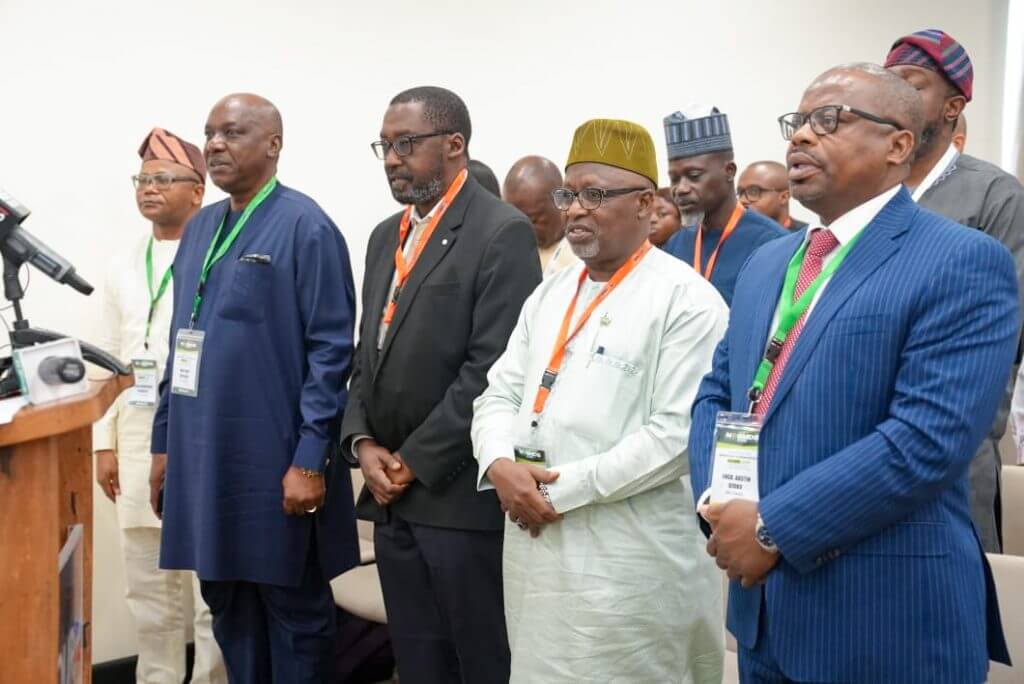
The renewed push took center stage at the 2026 Nigerian Oil and Gas Midstream and Downstream Stakeholders Summit in Lagos, where regulators, investors, operators, manufacturers, financiers, and indigenous service providers gathered to develop practical strategies, unlock investments, strengthen local capacity, and sustain growth across Nigeria’s energy industry.
The two-day summit, themed “Unlocking, Growing and Sustaining Nigerian Content Development in Nigeria’s Oil and Gas Midstream and Downstream Sectors”, underscored the Board’s broader agenda to consolidate gains already recorded in the upstream sector while accelerating investments in gas processing, refining, petrochemicals, infrastructure and local manufacturing.
Speaking at the opening session, the Executive Secretary of NCDMB, Engr Felix Omatsola Ogbe, described the midstream and downstream segments as the next frontier for industrial expansion, employment generation and national competitiveness as Nigeria intensifies efforts to build a more resilient energy economy.
The Executive Secretary, represented by the Director, Project Certification and Authorisation Directorate (PCAD), Engr. Austin Uzoka, said the summit was designed as a strategic platform to convert policy reforms, investment opportunities and stakeholder collaborations into measurable economic outcomes.
“This summit is not just another industry gathering. It is not merely a compliance event. It is not simply a networking platform. It is a strategic engagement designed to bring together key
stakeholders to collectively chart a practical and sustainable path for Nigerian Content development within the midstream and downstream sectors,” Uzoka stated.
He noted that the increase of Nigerian Content performance from about seven per cent to over 61 per cent reflected the growing capacity of indigenous companies and professionals within the industry.
According to him, “the Board is now focused on deepening those gains by strengthening gas infrastructure, expanding refining capacity, promoting value addition and creating sustainable opportunities for Nigerian businesses across the energy value chain.”
He stressed that the Board vision is to ensure that Nigerian Content is fully embedded across the upstream, midstream and downstream sectors, creating an integrated ecosystem where Nigerian businesses, Nigerian professionals and Nigerian communities can prosper sustainably.
The Director pointed to major industry milestones, including the Dangote Refinery, NLNG Train 7, modular refinery projects, fertiliser production initiatives and the Presidential Initiative on Compressed Natural Gas as evidence that Nigeria’s industrial narrative was changing from crude oil export dependency towards domestic refining, processing and value addition.
“For many years, Nigeria was largely known as a producer and exporter of crude oil while depending heavily on imported refined petroleum products and industrial feedstock. Today, that narrative is changing, and changing significantly,” he added.
In his welcome address, the Director, Monitoring and Evaluation, NCDMB, Barr. Esueme Dan-Kikile, reaffirmed the Board’s commitment to strengthening indigenous participation and promoting sustainable growth within the midstream and downstream sectors.
Kikile explained that the summit, organised in partnership with Greenfields Consultancy and Allied Services Limited, was intended to foster stronger collaboration among regulators, operators, investors, financial institutions and service providers towards generating practical solutions and actionable outcomes for the industry.
In his words, “NCDMB remains committed to advancing policies and programmes that promote value retention within the country, create employment opportunities for Nigerians, strengthen local manufacturing and service capabilities, and deepen strategic partnerships across the industry value chain”.
Delivering goodwill remarks on behalf of the Chairman, Senate Committee on Petroleum Resources (Midstream and Downstream), Sen. S.A. Kawu Sumaila, the Chief Executive Officer of ZAMKAH Technologies Limited, Amb. Zubairu Dalhatu Malami, commended NCDMB for
convening the summit at a critical period in Nigeria’s energy transition and industrial development journey.
He assured stakeholders of the National Assembly’s support for policies and legislative frameworks that promote efficiency, local capacity development, investment protection and sustainable growth.
“Nigerian Content must go beyond participation on paper. It must translate into real capacity — Nigerian companies leading major projects, Nigerian professionals advancing in technical skills, Nigerian manufacturers supplying quality inputs, Nigerian banks and institutions supporting sector financing and Nigerian communities benefiting meaningfully from industry activities,” he stated.
The Acting Executive Director, Economic Regulation and Strategic Planning at the Nigerian Midstream and Downstream Petroleum Regulatory Authority (NMDPRA), Dr Olasupo Agbaje, who represented the Authority’s Chief Executive, Rabiu Umar reaffirmed NMDPRA’s partnership with NCDMB and pledged continued institutional support for deepening Nigerian Content within the regulated space.
Umar disclosed that Nigeria’s energy sector was attracting growing foreign investment interest from Chinese, Indian, Western and other Asian investors, particularly in gas processing and infrastructure development.
“The NCDMB has been a partner, not just in terms of being participants in the same ministry, but a partner in investment and investment promotion, which is at the core of what we do. We hold NCDMB very dearly. The partnership and relationship can only get stronger,” he said.
He further assured stakeholders that the Authority would continue to support initiatives aimed at expanding downstream infrastructure and strengthening local participation.